
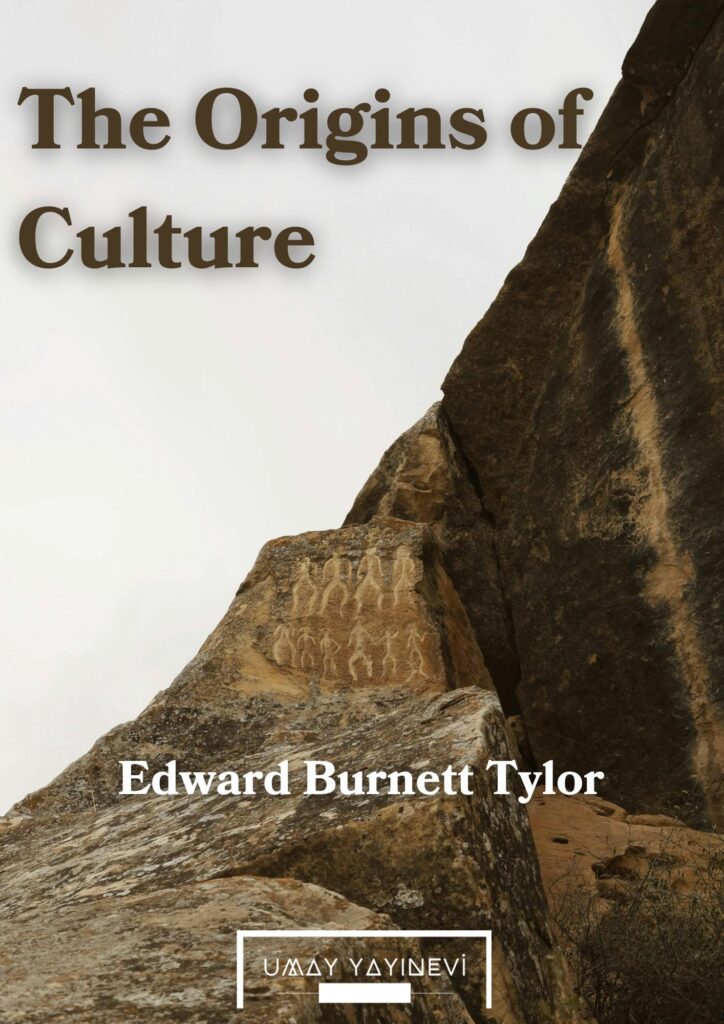
| Book Name | The Origins of Culture |
| Publishing Year | 2025 |
| Number of Pages | III+416 |
| Edition Number | 1 |
| ISBN | 978-625-97320-0-8 |
| DOI | https://doi.org/10.5281/zenodo.15620465 |
| Pub. No: | K02/02 |
| Main Topics | Culture, Civilization, Art, Mythology |
Öz:
Edward B. Tylor’un The Origins of Culture adlı eseri, modern antropolojinin temel kavramlarını kuran ve kültürün bilimsel biçimde incelenmesine yön veren klasik bir çalışmadır. Tylor, kültürü “toplumun bir üyesi olarak insanın edindiği bilgi, inanç, sanat, ahlak, hukuk, gelenek ve diğer tüm yeti ve alışkanlıkların bütünü” şeklinde tanımlayarak, bugün hâlâ geçerli olan kapsamlı bir kültür tanımı ortaya koyar. Eser, kültürün kökenlerini açıklarken evrimci antropolojinin paradigmasını benimser; insan topluluklarının basitten karmaşığa, “ilkel”den “uygar”a doğru ilerlediğini savunan doğrusal bir gelişim modeli sunar. Tylor, özellikle animizm teorisi ile bilinir. Ona göre dinin en eski biçimi, insanın ruh, hayalet ve doğaüstü güçlere dair gözlem ve deneyimlerinden ortaya çıkan animistik inançlardır. Bu yaklaşım, dinlerin kökenini doğaüstü varlıkların gerçekliğine değil, insan zihninin açıklama arayışına dayandırması bakımından dönemin düşüncesi üzerinde büyük etki yaratmıştır. Eserde büyü, mitoloji, tabu, ritüel ve sosyal kurumların gelişimi gibi konular karşılaştırmalı etnografik verilerle desteklenerek ele alınır. Tylor’un yöntemi, “hayatta kalmışlıklar” (survivals) kavramına dayanır: Modern toplumlarda görülen bazı gelenek ve pratiklerin, erken kültür evrelerinden kalma kalıntılar olduğunu öne sürer. Böylece kültür tarihinin izlerini günlük yaşamda takip etmenin mümkün olduğunu savunur. Tylor, kültürel benzerlikleri açıklamak için “bağımsız icat” ve “yayılma” süreçlerini tartışır; kültürün rastlantısal değil, belirli zihinsel ve toplumsal işleyişlere dayanan bir olgu olduğunu ifade eder. Genel olarak The Origins of Culture, kültür kuramının temelini atan, insan toplumlarının evrimsel gelişimini açıklayan ve antropolojiyi sistematik bir disiplin hâline getiren kurucu bir eserdir. Hem kuramsal çerçevesi hem de karşılaştırmalı analiz yöntemiyle sosyal bilimlerde kalıcı etkiler bırakmıştır.
Abstract:
Edward B. Tylor’s work The Origins of Culture is a classic study that established the fundamental concepts of modern anthropology and guided the scientific study of culture. Tylor defines culture as “the totality of knowledge, beliefs, arts, morals, laws, customs, and other capabilities and habits acquired by man as a member of society,” presenting a comprehensive definition of culture that is still valid today. In explaining the origins of culture, the work adopts the paradigm of evolutionary anthropology, presenting a linear model of development that argues that human communities progressed from simple to complex, from “primitive” to “civilized.” Tylor is particularly known for his theory of animism. According to him, the oldest form of religion is animistic beliefs arising from human observations and experiences of spirits, ghosts, and supernatural powers. This approach had a major impact on the thinking of the time, as it based the origins of religions not on the reality of supernatural beings, but on the human mind’s search for explanations. The work addresses topics such as magic, mythology, taboo, ritual, and the development of social institutions, supported by comparative ethnographic data. Tylor’s method is based on the concept of “survivals”: he argues that some traditions and practices seen in modern societies are remnants from early cultural stages. He thus argues that it is possible to trace the history of culture in everyday life. Tylor discusses the processes of “independent invention” and “diffusion” to explain cultural similarities, stating that culture is not a random phenomenon but one based on specific mental and social processes. Overall, The Origins of Culture is a seminal work that laid the foundation for cultural theory, explained the evolutionary development of human societies, and established anthropology as a systematic discipline. It has had a lasting impact on the social sciences through both its theoretical framework and its comparative analysis method.
CLICK HERE FOR MARC 21 AND ONIX 3.0 REGISTRATION.
| MARC 21 | ONIX 3.0 |
| LDR 00000nam a2200000 i 4500 001 UMY2025K0202 003 TR-UMY 008 250204s2025 tu 000 0 eng d 020 ## $a 9786259732008 024 7# $a 10.5281/zenodo.15620465 $2 doi 040 ## $a TR-UMY $b tur $e rda $c TR-UMY 041 0# $a eng 100 1# $a Tylor, Edward Burnett, $c Sir, $d 1832-1917, $e author. 245 14 $a The Origins of Culture / $c Edward Burnett Tylor. 250 ## $a 1. baskı. 264 #1 $a Samsun : $b Umay Yayınevi, $c 2025. 300 ## $a iii, 416 sayfa ; $c 21 cm. 490 1# $a Umay Yayınevi ; $v K02/02 500 ## $a Ana konular: Culture, Civilization, Art, Mythology. 650 #0 $a Culture. 650 #0 $a Civilization. 650 #0 $a Art. 650 #0 $a Mythology. 830 #0 $a Umay Yayınevi (Seri) ; $v K02/02. | <?xml version=”1.0″ encoding=”utf-8″?> <ONIXMessage release=”3.0″> <Header> <Sender> <SenderName>Umay Yayınevi</SenderName> </Sender> <SentDateTime>20260204</SentDateTime> </Header> <Product> <RecordReference>COM.UMAY.9786259732008</RecordReference> <NotificationType>03</NotificationType> <ProductIdentifier> <ProductIDType>15</ProductIDType> <IDValue>9786259732008</IDValue> </ProductIdentifier> <DescriptiveDetail> <ProductComposition>00</ProductComposition> <ProductForm>BC</ProductForm> <TitleDetail> <TitleType>01</TitleType> <TitleElement> <TitleText>The Origins of Culture</TitleText> </TitleElement> </TitleDetail> <Contributor> <SequenceNumber>1</SequenceNumber> <ContributorRole>A01</ContributorRole> <PersonName>Edward Burnett Tylor</PersonName> </Contributor> <EditionNumber>1</EditionNumber> <Language> <LanguageRole>01</LanguageRole> <LanguageCode>eng</LanguageCode> </Language> <Subject> <SubjectSchemeIdentifier>10</SubjectSchemeIdentifier> <SubjectHeadingText>Culture; Civilization; Art; Mythology</SubjectHeadingText> </Subject> <Subject> <SubjectSchemeIdentifier>20</SubjectSchemeIdentifier> <SubjectHeadingText>Culture, Civilization, Art, Mythology</SubjectHeadingText> </Subject> </DescriptiveDetail> <PublishingDetail> <Publisher> <PublisherRole>01</PublisherRole> <PublisherName>Umay Yayınevi</PublisherName> </Publisher> <CityOfPublication>Samsun</CityOfPublication> <PublishingStatus>04</PublishingStatus> <PublishingDate> <PublishingDateRole>01</PublishingDateRole> <Date>2025</Date> </PublishingDate> </PublishingDetail> <RelatedMaterial> <RelatedProduct> <ProductRelationCode>06</ProductRelationCode> <ProductIdentifier> <ProductIDType>06</ProductIDType> <IDValue>10.5281/zenodo.15620465</IDValue> </ProductIdentifier> </RelatedProduct> </RelatedMaterial> </Product> </ONIXMessage> |
 EN
EN  TR
TR