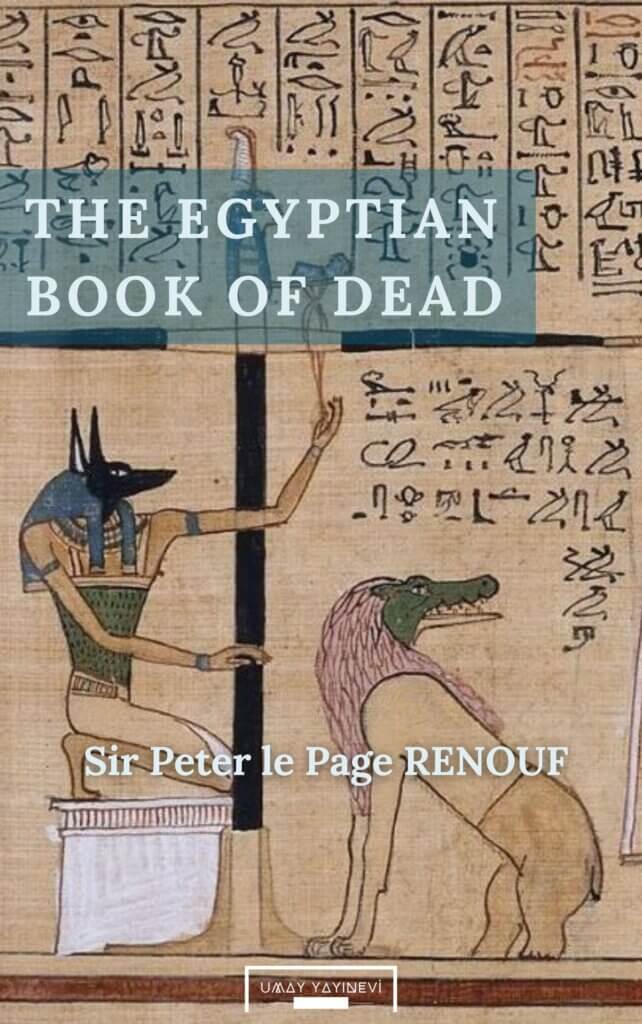
| Book Name | The Egyptian Book of the Dead |
| Publishing Year | 2025 |
| Number of Pages | III+376 |
| Edition Number | 1 |
| ISBN | 978-625-96142-9-8 |
| DOI | |
| Pub. No: | 12/09 |
| Main Topics | Eski Mısır, Ölüm Kitabı, Mısır Dini |
Öz:
Sir Peter le Page Renouf’un The Egyptian Book of the Dead üzerine yaptığı çalışma, Eski Mısır’ın ölüm sonrası inançlarını, ruhun yolculuğunu ve kozmolojik düzenini anlamaya yönelik en kapsamlı filolojik ve yorumlayıcı incelemelerden biridir. Renouf, “Ölüler Kitabı” olarak bilinen Papyrus of Ani başta olmak üzere çeşitli mezar metinlerini karşılaştırmalı bir yaklaşımla ele alarak metinlerin tarihsel kökenlerini, ritüel bağlamlarını ve teolojik alt yapısını açığa çıkarmayı amaçlar. Bu eser, hiyeroglif çözümlemeleri ve metin eleştirisi ile erken dönem Mısır çalışmalarında belirleyici bir dönüm noktası niteliğindedir. Renouf, metni yalnızca bir “ölüm rehberi” olarak değil, Eski Mısır toplumunun evren tasarımını, etik anlayışını ve bireyin kozmik düzen içindeki konumunu açıklayan çok katmanlı bir kültürel belge olarak yorumlar. Kitapta yer alan büyüler (spells), ilahiler, dua metinleri ve sembolik imgeler; ruhun Duat’ta (ölüler diyarı) karşılaştığı sınavlara, yargı sahnesine (Weighing of the Heart), koruyucu tanrılara ve dönüşüm motiflerine dair ayrıntılı bilgiler sunar. Renouf, bu metinlerin işlevini “ölümden sonraki varoluşu mümkün kılan ritüel bilgi” olarak tanımlar. Eserde özellikle Maat (kozmik adalet), Osiris kültü, büyüsel sözün gücü, bedenin korunmasının önemi ve ruhun çoklu yönleri (ba, ka, akh) gibi temel inanç unsurları filolojik açıklamalarla desteklenir. Renouf’un yorumu, metnin hem dini hem de mitolojik boyutunu kavratmayı hedefler; ayrıca metnin farklı dönemlerdeki biçimsel değişimlerini de inceleyerek “Ölüler Kitabı”nın sabit değil, sürekli gelişen bir ritüel korpus olduğunu gösterir. Genel olarak The Egyptian Book of the Dead çalışması, Eski Mısır ölüm ritüellerinin tarihsel gelişimini, metinsel yapısını ve anlam dünyasını disiplinlerarası bir yaklaşımla çözümlerken, modern Mısırbilimin temel kaynaklarından biri olarak önemini sürdürmektedir.
Abstract:
Sir Peter le Page Renouf’s study of The Egyptian Book of the Dead is one of the most comprehensive philological and interpretive examinations of ancient Egyptian beliefs about the afterlife, the journey of the soul, and the cosmic order. Renouf aims to reveal the historical origins, ritual contexts, and theological underpinnings of various tomb texts, primarily the Papyrus of Ani, known as the “Book of the Dead,” by taking a comparative approach. This work, with its hieroglyphic decipherments and textual criticism, represents a decisive turning point in early Egyptian studies. Renouf interprets the text not merely as a “guide to death,” but as a multi-layered cultural document that explains the ancient Egyptian conception of the universe, its ethical understanding, and the individual’s place within the cosmic order. The spells, hymns, prayer texts, and symbolic images in the book provide detailed information about the trials the soul faces in Duat (the realm of the dead), the judgment scene (Weighing of the Heart), protective gods, and motifs of transformation. Renouf defines the function of these texts as “ritual knowledge that makes existence after death possible.” The work supports fundamental elements of belief, such as Maat (cosmic justice), the cult of Osiris, the power of magical words, the importance of protecting the body, and the multiple aspects of the soul (ba, ka, akh), with philological explanations. Renouf’s interpretation aims to convey both the religious and mythological dimensions of the text; it also examines the formal changes of the text over different periods, demonstrating that the Book of the Dead is not static but a constantly evolving ritual corpus. Overall, The Egyptian Book of the Dead continues to be one of the fundamental sources of modern Egyptology, analyzing the historical development, textual structure, and semantic world of ancient Egyptian death rituals through an interdisciplinary approach.
CLICK HERE FOR MARC 21 AND ONIX 3.0 REGISTRATION.
| MARC 21 | ONIX 3.0 |
| LDR 00000nam a2200000 i 4500 001 UMY20251209 003 TR-UMY 008 260204s2025 tu 000 0 eng d 020 ## $a 9786259614298 040 ## $a TR-UMY $b tur $e rda $c TR-UMY 041 0# $a eng 100 1# $a Renouf, P. Le Page $q (Peter Le Page), $c Sir, $d 1822-1897, $e author. 245 14 $a The Egyptian Book of the Dead / $c Sir Peter le Page Renouf. 250 ## $a 1. baskı. 264 #1 $a Samsun : $b Umay Yayınevi, $c 2025. 300 ## $a iii, 376 sayfa ; $c 21 cm. 490 1# $a Umay Yayınevi ; $v 12/09 500 ## $a Ana konular: Eski Mısır, Ölüm Kitabı, Mısır Dini. 650 #0 $a Incantations, Egyptian. 650 #0 $a Egypt $x Religion. 650 #0 $a Funeral rites and ceremonies $z Egypt. 630 00 $a Book of the dead. 830 #0 $a Umay Yayınevi (Seri) ; $v 12/09. | <?xml version=”1.0″ encoding=”utf-8″?> <ONIXMessage release=”3.0″> <Header> <Sender> <SenderName>Umay Yayınevi</SenderName> </Sender> <SentDateTime>20260204</SentDateTime> </Header> <Product> <RecordReference>COM.UMAY.9786259614298</RecordReference> <NotificationType>03</NotificationType> <ProductIdentifier> <ProductIDType>15</ProductIDType> <IDValue>9786259614298</IDValue> </ProductIdentifier> <DescriptiveDetail> <ProductComposition>00</ProductComposition> <ProductForm>BC</ProductForm> <TitleDetail> <TitleType>01</TitleType> <TitleElement> <TitleText>The Egyptian Book of the Dead</TitleText> </TitleElement> </TitleDetail> <Contributor> <SequenceNumber>1</SequenceNumber> <ContributorRole>A01</ContributorRole> <PersonName>Sir Peter le Page Renouf</PersonName> <PersonNameInverted>Renouf, Peter le Page, Sir</PersonNameInverted> </Contributor> <EditionNumber>1</EditionNumber> <Language> <LanguageRole>01</LanguageRole> <LanguageCode>eng</LanguageCode> </Language> <Subject> <SubjectSchemeIdentifier>10</SubjectSchemeIdentifier> <SubjectHeadingText>Egypt — Religion; Incantations, Egyptian; Book of the dead</SubjectHeadingText> </Subject> <Subject> <SubjectSchemeIdentifier>20</SubjectSchemeIdentifier> <SubjectHeadingText>Eski Mısır, Ölüm Kitabı, Mısır Dini</SubjectHeadingText> </Subject> </DescriptiveDetail> <PublishingDetail> <Publisher> <PublisherRole>01</PublisherRole> <PublisherName>Umay Yayınevi</PublisherName> </Publisher> <CityOfPublication>Samsun</CityOfPublication> <PublishingStatus>04</PublishingStatus> <PublishingDate> <PublishingDateRole>01</PublishingDateRole> <Date>2025</Date> </PublishingDate> </PublishingDetail> </Product> </ONIXMessage> |
 EN
EN  TR
TR