
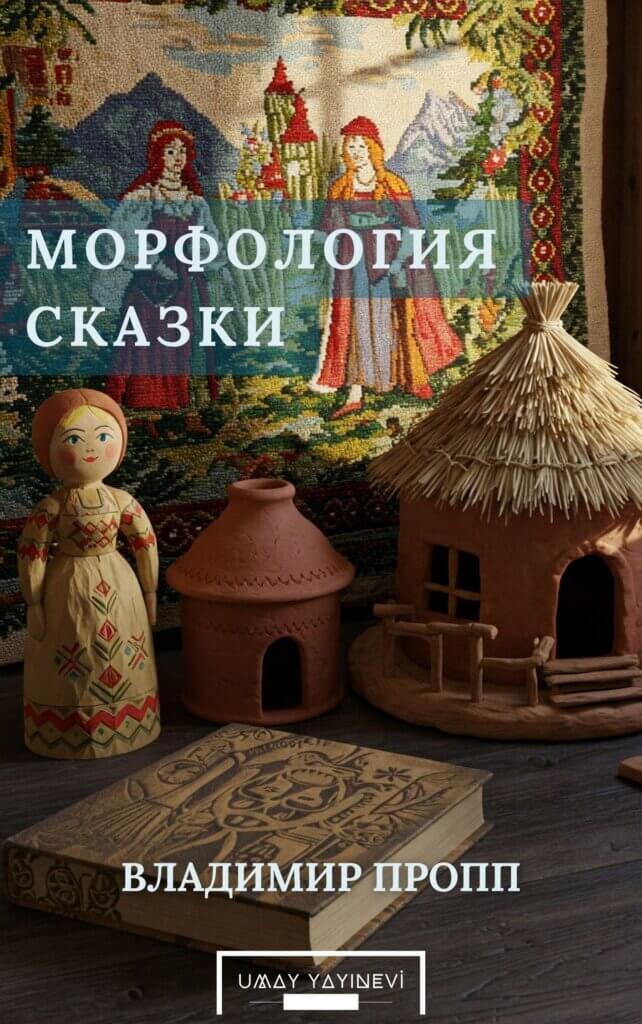
| Book Name | Морфология Сказки |
| Publishing Year | 2022 |
| Number of Pages | III+152 |
| Edition Number | 1 |
| ISBN | 978-625-97320-7-7 |
| DOI | https://doi.org/10.5281/zenodo.15620506 |
| Pub. No: | 01/01 |
| Main Topics | Masal, Yapı, Kültür |
Öz:
Vladimir Propp’un Morfologia Skazki adlı eseri, halk masallarının yapısal çözümlemesine yönelik modern folklor kuramının en etkili ve dönüştürücü çalışmalarından biridir. Propp, Rus olağanüstü masallarını inceleyerek masalların yüzeydeki çeşitliliğine karşın derin yapılarında düzenli, tekrarlayan ve sınırlı sayıda işlev barındırdığını ortaya koyar. Ona göre masalların temelini, “karakter” değil “işlev” oluşturur; yani bir figürün kim olduğundan çok, anlatı içinde ne yaptığının önemi vardır. Bu yaklaşım, halk anlatılarının biçimsel yapısını bilimsel olarak sınıflandırma girişimlerinde dönüm noktası niteliğindedir. Propp’un en önemli katkısı, masallardaki olay örgüsünü 31 temel işlev üzerinden tanımlamasıdır. Bu işlevler belirli bir mantıksal zincir hâlinde, çoğunlukla aynı sıralamayla ortaya çıkar ve böylece masalın “biçimsel iskeletini” oluşturur. Örneğin “yasak”, “yasak ihlali”, “kahramanın yola çıkışı”, “donorla karşılaşma”, “sınav”, “büyülü nesnenin elde edilmesi”, “kötünün cezalandırılması” ve “mutlu son” gibi işlevler, masalın anlatısal örgüsünü belirleyen temel aşamalardır. Propp ayrıca karakterleri de işlevsel rollerine göre sınıflandırarak yedi temel karakter tipinden söz eder: kahraman, kötü, bağışçı (donor), yardımcı, sahte kahraman, prenses ve onun babası, gönderici. Böylece anlatıdaki figürlerin rollerinin kültürel bağlamdan bağımsız olarak yapısal bir sistem içinde anlaşılabileceğini gösterir. Eser, anlatı bilimi, yapısalcılık ve modern folklor araştırmalarının şekillenmesinde belirleyici bir etki yaratmıştır. Claude Lévi-Strauss, Roland Barthes ve Greimas gibi düşünürlerin yapısalcı çalışmalarında Propp’un kategorilerinden yoğun biçimde yararlanılmıştır. Propp, masalı yalnızca kültürel bir ürün olarak değil, kendi içsel mantığı ve yapısal kuralları olan bir anlatı türü olarak ele alarak, halkbiliminde sistematik çözümleme geleneğinin temelini atmıştır. Genel olarak Morfologia Skazki, masalların biçimsel yapısını bilimsel yöntemle inceleyen, anlatı çözümlemesine evrensel bir model öneren ve folklor çalışmalarında devrim niteliğinde bir yapıtaştır.
Abstract:
Vladimir Propp’s work Morphology of the Folktale is one of the most influential and transformative works of modern folklore theory on the structural analysis of folk tales. By examining Russian fairy tales, Propp reveals that despite their surface diversity, tales contain a limited number of regular, recurring functions in their deep structures. According to him, the basis of fairy tales is not “character” but “function”; that is, what a figure does in the narrative is more important than who they are. This approach marks a turning point in attempts to scientifically classify the formal structure of folk narratives. Propp’s most important contribution is his definition of the plot of fairy tales through 31 basic functions. These functions appear in a specific logical chain, mostly in the same order, thus forming the “formal skeleton” of the fairy tale. For example, functions such as “prohibition,” “violation of the prohibition,” “the hero’s departure,” “encounter with the donor,” “trial,” “acquisition of the magical object,” “punishment of the villain,” and “happy ending” are the fundamental stages that determine the narrative structure of the fairy tale. Propp also classifies characters according to their functional roles, discussing seven basic character types: the hero, the villain, the donor, the helper, the false hero, the princess and her father, and the messenger. He thus demonstrates that the roles of figures in the narrative can be understood within a structural system independent of cultural context. The work has had a decisive influence on the shaping of narrative science, structuralism, and modern folklore studies. Thinkers such as Claude Lévi-Strauss, Roland Barthes, and Greimas have made extensive use of Propp’s categories in their structuralist works. Propp laid the foundation for systematic analysis in folklore by treating the fairy tale not merely as a cultural product, but as a narrative type with its own internal logic and structural rules.
CLICK HERE FOR MARC 21 AND ONIX 3.0 REGISTRATION.
| MARC 21 | ONIX 3.0 |
| LDR 00000nam a2200000 i 4500 001 UMY20220101 003 TR-UMY 008 220101s2022 tu 000 0 tur d 020 ## $a 9786259732077 024 7# $a 10.5281/zenodo.15620506 $2 doi 040 ## $a TR-UMY $b tur $e rda $c TR-UMY 100 1# $a Propp, Vladimir, $e author. 245 10 $a Морфология Сказки / $c Vladimir Propp. 250 ## $a 1. baskı. 264 #1 $a Samsun : $b Umay Yayınevi, $c 2022. 300 ## $a iii, 152 sayfa ; $c 21 cm. 490 1# $a Umay Yayınevi ; $v 01/01 500 ## $a Ana konular: Masal, Yapı, Kültür. 650 #0 $a Fairy tales $x Morphology. 650 #0 $a Folklore $x Structural analysis. 650 #7 $a Masal $x Yapısal analiz. $2 local 830 #0 $a Umay Yayınevi (Seri) ; $v 01/01. | <?xml version=”1.0″ encoding=”utf-8″?> <ONIXMessage release=”3.0″> <Header> <Sender> <SenderName>Umay Yayınevi</SenderName> </Sender> <SentDateTime>20260204</SentDateTime> </Header> <Product> <RecordReference>COM.UMAY.9786259732077</RecordReference> <NotificationType>03</NotificationType> <ProductIdentifier> <ProductIDType>15</ProductIDType> <IDValue>9786259732077</IDValue> </ProductIdentifier> <DescriptiveDetail> <ProductComposition>00</ProductComposition> <ProductForm>BC</ProductForm> <TitleDetail> <TitleType>01</TitleType> <TitleElement> <TitleText>Морфология Сказки</TitleText> </TitleElement> </TitleDetail> <Contributor> <SequenceNumber>1</SequenceNumber> <ContributorRole>A01</ContributorRole> <PersonName>Vladimir Propp</PersonName> </Contributor> <EditionNumber>1</EditionNumber> <Language> <LanguageRole>01</LanguageRole> <LanguageCode>tur</LanguageCode> </Language> <Subject> <SubjectSchemeIdentifier>10</SubjectSchemeIdentifier> <SubjectHeadingText>Fairy tales — Morphology; Folklore — Structural analysis</SubjectHeadingText> </Subject> <Subject> <SubjectSchemeIdentifier>20</SubjectSchemeIdentifier> <SubjectHeadingText>Masal, Yapı, Kültür</SubjectHeadingText> </Subject> </DescriptiveDetail> <PublishingDetail> <Publisher> <PublisherRole>01</PublisherRole> <PublisherName>Umay Yayınevi</PublisherName> </Publisher> <CityOfPublication>Samsun</CityOfPublication> <PublishingStatus>04</PublishingStatus> <PublishingDate> <PublishingDateRole>01</PublishingDateRole> <Date>2022</Date> </PublishingDate> </PublishingDetail> <RelatedMaterial> <RelatedProduct> <ProductRelationCode>06</ProductRelationCode> <ProductIdentifier> <ProductIDType>06</ProductIDType> <IDValue>10.5281/zenodo.15620506</IDValue> </ProductIdentifier> </RelatedProduct> </RelatedMaterial> </Product> </ONIXMessage> |
 EN
EN  TR
TR