
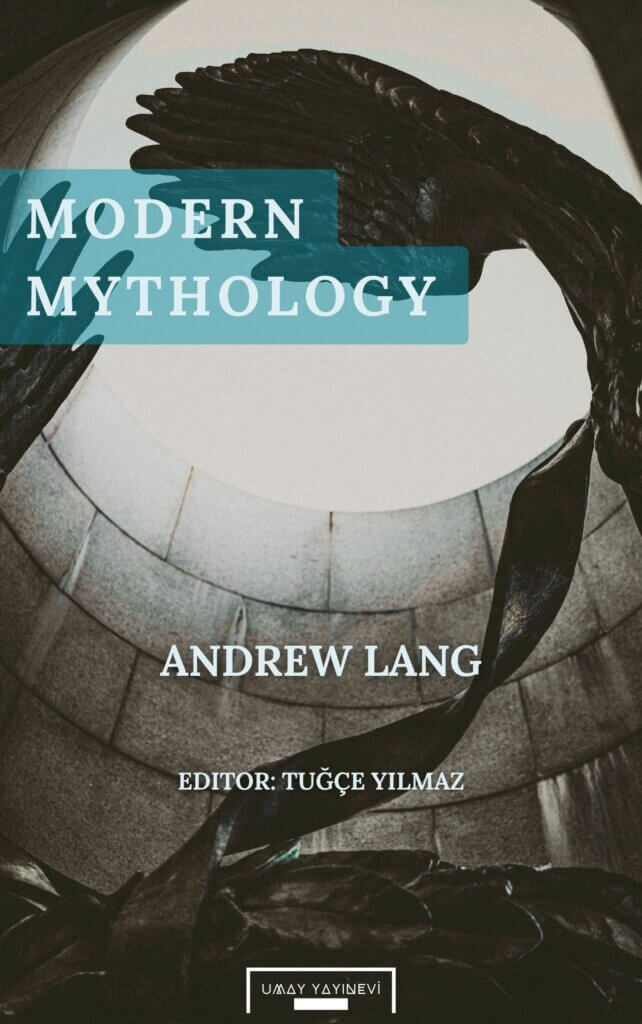
| Book Name | Modern Mythology |
| Publishing Year | 2025 |
| Number of Pages | V+178 |
| Edition Number | 1. Baskı |
| ISBN | 978-625-93587-0-3 |
| DOI | https://doi.org/10.5281/zenodo.18189672 |
| Pub. No: | 14 |
| Main Topics | Mitoloji, Kültür, Ritüel |
Öz:
Andrew Lang’ın Modern Mythology adlı eseri, 19. yüzyıl sonu mitoloji tartışmalarına eleştirel bir müdahale niteliği taşır ve özellikle dönemin “güneş miti” merkezli indirgemeci yaklaşımlarını sorgular. Lang bu çalışmada, mitlerin yalnızca doğa olaylarının —özellikle güneş, ay ve meteorolojik döngülerin— alegorik anlatımları olarak açıklanamayacağını savunur. Ona göre mitoloji, insan zihninin erken evrelerine özgü düşünme biçimlerinin, toplumsal pratiklerin ve kültürel sürekliliğin ürünüdür. Kitap, Max Müller ve benzeri filologların mitleri dilsel bozulmalar ve metaforların yanlış anlaşılmasıyla açıklayan tezlerine karşı geliştirilmiş kapsamlı bir eleştiridir. Lang, bu teorilerin evrensel mitolojik motifleri açıklamakta yetersiz kaldığını ileri sürer. Avustralya Aborjinleri, Afrika, Amerika ve Okyanusya toplumlarından derlediği etnografik örneklerle, “ilkel” olarak adlandırılan topluluklarda görülen mitolojik yapıların, Avrupa klasik mitleriyle yapısal ve tematik benzerlikler taşıdığını gösterir. Lang’ın temel argümanı, mitlerin kökeninde animizm, totemizm ve erken dönem toplumsal kurumların yer aldığıdır. Mit, yalnızca doğayı açıklama çabası değil; ritüel, tabu, ahlâk ve toplumsal düzenin sembolik bir ifadesidir. Bu bağlamda mitoloji, ilerleyen uygarlık aşamalarında tamamen ortadan kalkmayan, aksine yeni biçimler alarak yaşamaya devam eden bir düşünce alanıdır. Modern Mythology, karşılaştırmalı mitolojiye antropolojik bir yön kazandırması bakımından önemlidir. Lang, mitlerin evrimci bir çizgide “ilkelden gelişmişe” doğru basitçe ilerlemediğini; aksine farklı kültürlerde eşzamanlı ve karmaşık biçimlerde ortaya çıktığını vurgular. Eser, mitolojiyi yalnızca antik geçmişe ait bir kalıntı değil, modern düşüncenin ve kültürel bilinçaltının da etkin bir parçası olarak ele alır.
Abstract:
Andrew Lang’s work Modern Mythology constitutes a critical intervention in late 19th-century debates on mythology, particularly questioning the reductionist approaches of the period centered on the “sun myth.” In this work, Lang argues that myths cannot be explained solely as allegorical representations of natural phenomena—especially the sun, moon, and meteorological cycles. According to him, mythology is a product of early forms of human thought, social practices, and cultural continuity. The book is a comprehensive critique of the theories of Max Müller and other philologists who explained myths through linguistic corruption and misunderstandings of metaphors. Lang argues that these theories fall short in explaining universal mythological motifs. Using ethnographic examples collected from Australian Aborigines, African, American, and Oceanic societies, he demonstrates that the mythological structures found in so-called “primitive” communities bear structural and thematic similarities to European classical myths. Lang’s fundamental argument is that animism, totemism, and early social institutions lie at the origin of myths. Myth is not merely an attempt to explain nature; it is a symbolic expression of ritual, taboo, morality, and social order. In this context, mythology is a field of thought that does not disappear completely in advanced stages of civilization but continues to exist in new forms. Modern Mythology is significant in that it adds an anthropological dimension to comparative mythology. Lang emphasizes that myths did not simply evolve from “primitive to advanced” in a linear fashion; rather, they emerged simultaneously and in complex forms across different cultures. The work treats mythology not merely as a relic of the ancient past, but as an active component of modern thought and the cultural unconscious.
CLICK HERE FOR MARC 21 AND ONIX 3.0 REGISTRATION.
| MARC 21 | ONIX 3.0 |
| LDR 00000nam a2200000 i 4500 001 UMY20251310 003 TR-UMY 008 260204s2025 tu 000 0 eng d 020 ## $a 9786259732084 040 ## $a TR-UMY $b tur $e rda $c TR-UMY 041 0# $a eng 100 1# $a Lang, Andrew, $d 1844-1912, $e author. 245 10 $a Custom and Myth / $c Andrew Lang. 250 ## $a 1. baskı. 264 #1 $a Samsun : $b Umay Yayınevi, $c 2025. 300 ## $a v, 228 sayfa ; $c 21 cm. 490 1# $a Umay Yayınevi ; $v 13/10 500 ## $a Ana konular: Gelenek, Mit, Kültür, Ritüel. 650 #0 $a Mythology. 650 #0 $a Folklore. 650 #0 $a Manners and customs. 650 #0 $a Religion, Primitive. 830 #0 $a Umay Yayınevi (Seri) ; $v 13/10. | <?xml version=”1.0″ encoding=”utf-8″?> <ONIXMessage release=”3.0″> <Header> <Sender> <SenderName>Umay Yayınevi</SenderName> </Sender> <SentDateTime>20260204</SentDateTime> </Header> <Product> <RecordReference>COM.UMAY.9786259732084</RecordReference> <NotificationType>03</NotificationType> <ProductIdentifier> <ProductIDType>15</ProductIDType> <IDValue>9786259732084</IDValue> </ProductIdentifier> <DescriptiveDetail> <ProductComposition>00</ProductComposition> <ProductForm>BC</ProductForm> <TitleDetail> <TitleType>01</TitleType> <TitleElement> <TitleText>Custom and Myth</TitleText> </TitleElement> </TitleDetail> <Contributor> <SequenceNumber>1</SequenceNumber> <ContributorRole>A01</ContributorRole> <PersonName>Andrew Lang</PersonName> <PersonNameInverted>Lang, Andrew</PersonNameInverted> </Contributor> <EditionNumber>1</EditionNumber> <Language> <LanguageRole>01</LanguageRole> <LanguageCode>eng</LanguageCode> </Language> <Subject> <SubjectSchemeIdentifier>10</SubjectSchemeIdentifier> <SubjectHeadingText>Mythology; Folklore; Manners and customs</SubjectHeadingText> </Subject> <Subject> <SubjectSchemeIdentifier>20</SubjectSchemeIdentifier> <SubjectHeadingText>Gelenek, Mit, Kültür, Ritüel</SubjectHeadingText> </Subject> </DescriptiveDetail> <PublishingDetail> <Publisher> <PublisherRole>01</PublisherRole> <PublisherName>Umay Yayınevi</PublisherName> </Publisher> <CityOfPublication>Samsun</CityOfPublication> <PublishingStatus>04</PublishingStatus> <PublishingDate> <PublishingDateRole>01</PublishingDateRole> <Date>2025</Date> </PublishingDate> </PublishingDetail> </Product> </ONIXMessage> |
 EN
EN  TR
TR