
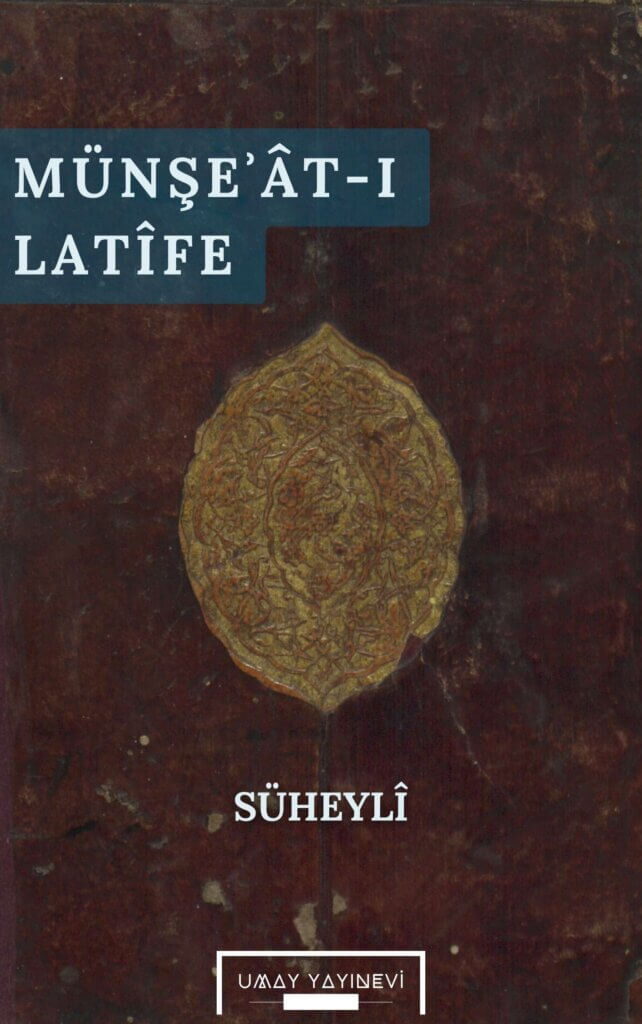
| Book Name | Münşeʾât-ı Latîfe |
| Publishing Year | 2025 |
| Number of Pages | III+545 |
| Edition Number | 1 |
| ISBN | 978-625-97320-4-6 |
| DOI | https://doi.org/10.5281/zenodo.15653130 |
| Pub. No: | S01/07 |
| Main Topics | Letaif, münşeat |
Öz:
Süheylî’nin Münşeʾât-ı Latîfe’si, Osmanlı klasik nesrinin inşa (mektup ve yazışma) geleneğini temsil eden en zarif ve edebî bakımdan rafine örneklerden biridir. Eser, Süheylî mahlaslı müellife atfedilen çeşitli mektuplar, tebriknameler, temenniler, hiciv ve latife unsurları taşıyan kısa yazılar ve kimi zaman manzum parçalardan oluşan bir mecmuadır. Osmanlı kültüründe münşeat kitapları hem bürokratik yazışmanın kalıplarını öğretmek hem de sanatlı nesrin estetik inceliklerini genç yazıcılara aktarmak gibi işlevlere sahip olduğundan, Münşeʾât-ı Latîfe hem pedagojik hem de edebî bir karakter taşır. Eserin dili, süslü nesrin belirgin özelliklerini yansıtır: Arapça ve Farsça terkiplerle zenginleşen kelime örgüsü, secili ve ritmik cümleler, teşbih ve mecazlarla bezenmiş ifadeler metinlerin temel niteliğidir. Bu üslup, Osmanlı medrese eğitiminin etkisiyle şekillenmiş olup, dönemin entelektüel çevrelerince edebî bir maharet olarak kabul edilmiştir. Süheylî’nin metinlerinde yalnızca övgü veya tebrik değil, aynı zamanda ince bir mizah, zarif bir ironi ve günlük hayatın nükteleri de göze çarpar. Bu yönüyle eser, sadece bir yazışma kalıpları derlemesi değil, aynı zamanda dönemin zihniyet dünyasını yansıtan kültürel bir belge niteliğindedir. Münşeʾât-ı Latîfe, sosyal tarih açısından da önem taşır; çünkü metinlerde devlet adamları, âlimler ve dost çevreleri arasındaki nezaket kuralları, hitap biçimleri ve toplumsal hiyerarşinin nasıl dilsel olarak kurulduğu izlenebilir. Ayrıca mecmuada yer alan örnekler, Osmanlı toplumunda mektubun yalnızca haberleşme aracı değil, aynı zamanda estetik bir ifade biçimi olduğunu gösterir. Sonuç olarak Süheylî’nin Münşeʾât-ı Latîfe’si, klasik Osmanlı inşa geleneğinin üslup, düşünce ve edebî tatlarını bir arada sunan; hem edebiyat tarihi hem de kültürel tarih araştırmaları için vazgeçilmez bir kaynak niteliğindeki bir münşeat mecmuasıdır.
Abstract:
Süheylî’s Münşeʾât-ı Latîfe is one of the most elegant and refined examples of Ottoman classical prose representing the tradition of correspondence (letters and correspondence). The work is a collection of various letters, congratulatory messages, wishes, satirical and humorous short writings, and sometimes rhymed pieces attributed to the author known by the pen name Süheylî. Since münşeat books in Ottoman culture served both to teach the patterns of bureaucratic correspondence and to convey the aesthetic subtleties of artistic prose to young scribes, Münşeʾât-ı Latîfe has both a pedagogical and literary character. The language of the work reflects the distinctive features of ornate prose: a vocabulary enriched with Arabic and Persian compounds, selected and rhythmic sentences, and expressions adorned with similes and metaphors are fundamental characteristics of the texts. This style was shaped by the influence of Ottoman madrasa education and was accepted as a literary skill by the intellectual circles of the period. Süheylî’s texts feature not only praise or congratulations, but also subtle humor, refined irony, and witticisms from daily life. In this respect, the work is not merely a collection of correspondence templates, but also a cultural document reflecting the mindset of the period. Münşeʾât-ı Latîfe is also significant from a social history perspective, as the texts reveal the rules of etiquette, forms of address, and how social hierarchy was linguistically constructed among statesmen, scholars, and circles of friends. Furthermore, the examples in the collection demonstrate that letters in Ottoman society were not merely a means of communication but also an aesthetic form of expression. In conclusion, Süheylî’s Münşeʾât-ı Latîfe is a collection of letters that brings together the style, thought, and literary tastes of the classical Ottoman tradition; it is an indispensable source for both literary history and cultural history research.
CLICK HERE FOR MARC 21 AND ONIX 3.0 REGISTRATION.
| MARC 21 | ONIX 3.0 |
| LDR 00000nam a2200000 i 4500 001 UMY2025S0107 003 TR-UMY 008 260204s2025 tu 000 0 tur d 020 ## $a 9786259732046 024 7# $a 10.5281/zenodo.15653130 $2 doi 040 ## $a TR-UMY $b tur $e rda $c TR-UMY 100 1# $a Süheylî, $e author. 245 10 $a Münşeʾât-ı Latîfe / $c Süheylî. 250 ## $a 1. baskı. 264 #1 $a Samsun : $b Umay Yayınevi, $c 2025. 300 ## $a iii, 545 sayfa ; $c 21 cm. 490 1# $a Umay Yayınevi ; $v S01/07 500 ## $a Ana konular: Letaif, münşeat. 650 #0 $a Turkish literature $y Old Turkish (to 1500) 650 #0 $a Turkish letters $y 17th century. 650 #7 $a Letaif. $2 local 650 #7 $a Münşeat. $2 local 830 #0 $a Umay Yayınevi (Seri) ; $v S01/07. | <?xml version=”1.0″ encoding=”utf-8″?> <ONIXMessage release=”3.0″> <Header> <Sender> <SenderName>Umay Yayınevi</SenderName> </Sender> <SentDateTime>20260204</SentDateTime> </Header> <Product> <RecordReference>COM.UMAY.9786259732046</RecordReference> <NotificationType>03</NotificationType> <ProductIdentifier> <ProductIDType>15</ProductIDType> <IDValue>9786259732046</IDValue> </ProductIdentifier> <DescriptiveDetail> <ProductComposition>00</ProductComposition> <ProductForm>BC</ProductForm> <TitleDetail> <TitleType>01</TitleType> <TitleElement> <TitleText>Münşeʾât-ı Latîfe</TitleText> </TitleElement> </TitleDetail> <Contributor> <SequenceNumber>1</SequenceNumber> <ContributorRole>A01</ContributorRole> <PersonName>Süheylî</PersonName> </Contributor> <EditionNumber>1</EditionNumber> <Language> <LanguageRole>01</LanguageRole> <LanguageCode>tur</LanguageCode> </Language> <Subject> <SubjectSchemeIdentifier>10</SubjectSchemeIdentifier> <SubjectHeadingText>Turkish letters — 17th century; Turkish literature — Ottoman Empire</SubjectHeadingText> </Subject> <Subject> <SubjectSchemeIdentifier>20</SubjectSchemeIdentifier> <SubjectHeadingText>Letaif, münşeat</SubjectHeadingText> </Subject> </DescriptiveDetail> <PublishingDetail> <Publisher> <PublisherRole>01</PublisherRole> <PublisherName>Umay Yayınevi</PublisherName> </Publisher> <CityOfPublication>Samsun</CityOfPublication> <PublishingStatus>04</PublishingStatus> <PublishingDate> <PublishingDateRole>01</PublishingDateRole> <Date>2025</Date> </PublishingDate> </PublishingDetail> <RelatedMaterial> <RelatedProduct> <ProductRelationCode>06</ProductRelationCode> <ProductIdentifier> <ProductIDType>06</ProductIDType> <IDValue>10.5281/zenodo.15653130</IDValue> </ProductIdentifier> </RelatedProduct> </RelatedMaterial> </Product> </ONIXMessage> |
 EN
EN  TR
TR